How AI Vehicle Inspections Work: Computer Vision Explained
A deep dive into the technology behind automated vehicle assessments
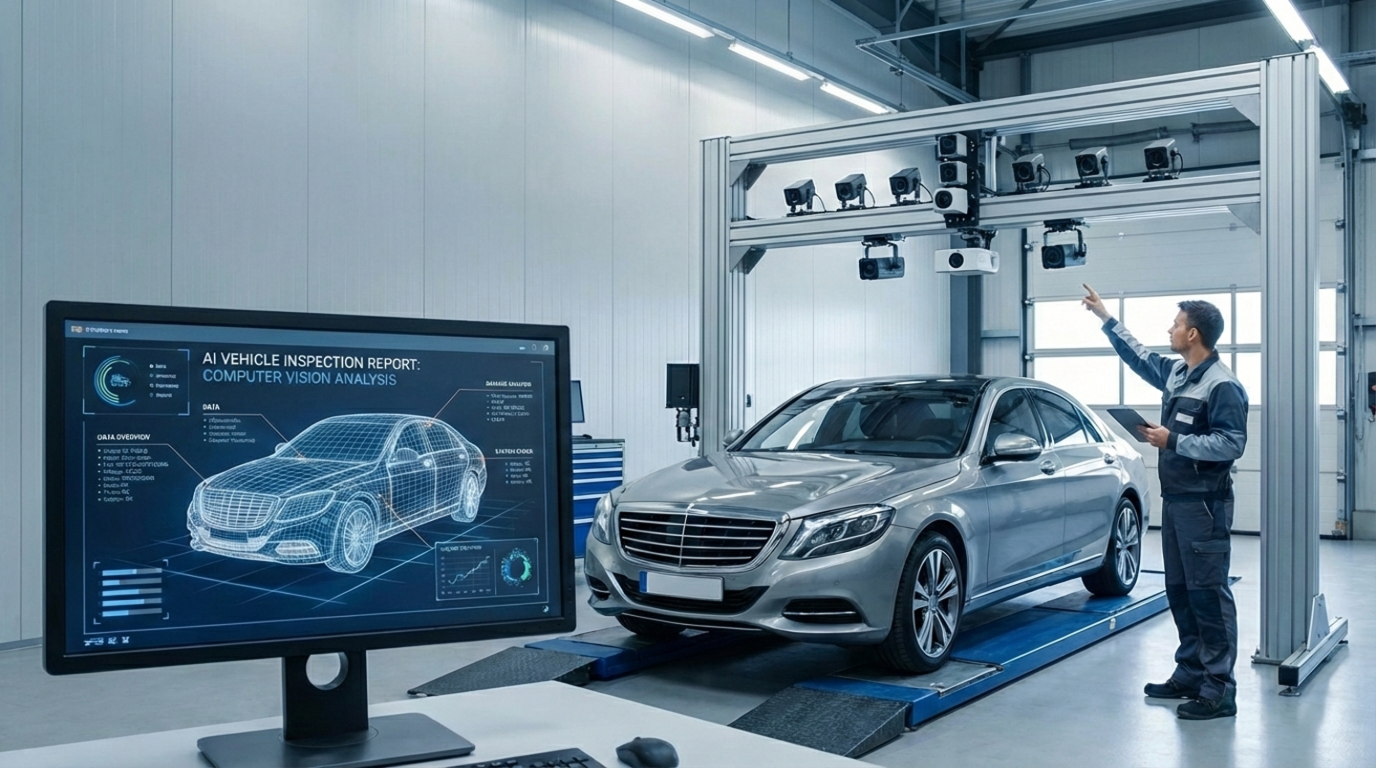
The used car industry processes tens of millions of transactions annually in the United States alone, and a majority of buyers report anxiety about hidden vehicle defects. AI-powered vehicle inspections are revolutionizing this landscape by leveraging computer vision technology to detect issues that would take a trained human inspector significantly longer to identify. At Autora, we use these advanced systems to bring unprecedented transparency to every vehicle listing on our platform.
What Is Computer Vision in Vehicle Inspections?
Computer vision is a branch of artificial intelligence that enables machines to interpret and analyze visual information from the physical world. In the context of vehicle inspections, computer vision systems use high-resolution cameras and sophisticated algorithms to examine every inch of a car's exterior, interior, and undercarriage. These systems process thousands of images in seconds, identifying patterns that indicate damage, wear, or potential mechanical issues.
Unlike traditional photography-based listings, AI inspection systems don't just capture images -- they analyze them. Each photograph is broken down into millions of data points, compared against vast databases of known defects, and scored for severity. This process happens in real time, delivering comprehensive results faster than any human inspector could achieve.
The Neural Network Architecture Behind the Scenes
Convolutional Neural Networks (CNNs)
At the core of AI vehicle inspection lies a class of deep learning models called Convolutional Neural Networks, or CNNs. These networks are specifically designed to process visual data by applying a series of filters across an image. Each filter detects different features -- edges, textures, color gradients, and shapes. As data moves through deeper layers of the network, the system learns to recognize increasingly complex patterns, from simple scratches to subtle signs of frame misalignment.
Transfer Learning and Domain-Specific Training
Modern AI inspection systems don't start from scratch. They use transfer learning, beginning with models pre-trained on millions of general images and then fine-tuning them on extensive datasets of vehicle-specific photographs. This approach allows the system to leverage broad visual understanding while developing expertise in automotive defect detection. Autora's models have been trained on extensive datasets of annotated vehicle images spanning every major make and model from the last 20 years.
The Inspection Pipeline: From Camera to Report
Step 1: Image Capture
The process begins with systematic image capture. High-resolution cameras photograph the vehicle from standardized angles -- typically between 50 and 120 shots per vehicle. These include wide exterior views, close-ups of panels, wheel wells, undercarriage shots, engine bay images, and detailed interior photographs. Consistent lighting and positioning are critical to ensuring the AI can make accurate comparisons.
Step 2: Pre-Processing and Normalization
Raw images undergo pre-processing to normalize lighting conditions, correct lens distortion, and standardize resolution. This step ensures the AI model receives consistent input regardless of environmental factors during capture. Color calibration targets placed in the scene help the system account for variations in ambient lighting.
Step 3: Defect Detection and Classification
The normalized images are fed through multiple specialized neural networks simultaneously. One model focuses on paint defects (scratches, chips, oxidation), another on structural anomalies (dents, misaligned panels, frame damage indicators), and another on wear patterns (tire tread, brake pad thickness, interior surface degradation). Each model produces a heat map highlighting areas of concern with confidence scores.
Step 4: Severity Scoring and Report Generation
Detected issues are classified by severity on a standardized scale. The system considers factors like defect size, location, depth, and potential impact on safety or resale value. All findings are compiled into a comprehensive inspection report that includes annotated images, severity ratings, and recommended actions. This report is generated in under five minutes -- compared to the 60-90 minutes a thorough manual inspection typically requires.
Key Technologies That Make It Possible
- High-Dynamic-Range (HDR) Imaging: Captures detail in both shadows and highlights, revealing defects that standard photography would miss
- Semantic Segmentation: Identifies and labels every pixel in an image, distinguishing between paint, chrome, glass, rubber, and plastic surfaces
- Object Detection Networks: Locates specific components like headlights, mirrors, and trim pieces to verify completeness and condition
- Depth Estimation: Uses stereo vision or structured light to measure dent depth and surface irregularities with high precision
- Temporal Analysis: Compares current images against previous inspections to track progressive wear or new damage
Real-World Accuracy and Continuous Improvement
AI inspection systems are not static -- they improve continuously through a feedback loop. Every human review of an AI-generated report provides additional training data. When a human inspector identifies a defect the AI missed, or flags a false positive, that information is used to retrain and refine the models. This iterative process means that accuracy rates climb steadily over time. Current systems achieve high detection rates for major defects and strong performance for minor cosmetic issues.
What This Means for Used Car Buyers
For buyers on the Autora platform, AI-powered inspections translate to confidence. Every vehicle listing includes a detailed inspection report backed by computer vision analysis. You can see exactly what the AI detected, review annotated photographs, and understand the condition of the car before you ever visit a dealership. This transparency eliminates the guesswork and anxiety that has traditionally plagued used car purchases.
To learn more about the specific points covered in our inspections, read our detailed guide on the 150-Point Vehicle Inspection Explained at /blog/150-point-vehicle-inspection-explained. For a comparison of how AI stacks up against traditional methods, check out AI vs Human Car Inspections at /blog/ai-vs-human-car-inspections.
Frequently Asked Questions
How long does an AI vehicle inspection take?
The image capture process takes approximately 15-20 minutes per vehicle. Once images are uploaded, the AI analysis and report generation is completed in under 5 minutes. This is significantly faster than traditional inspections, which typically require 60-90 minutes of hands-on evaluation by a trained mechanic.
Can AI inspections detect mechanical problems?
Current AI inspection systems excel at visual defect detection -- paint damage, body panel issues, tire wear, and interior condition. Mechanical diagnostics are supplemented through OBD-II data reading, which pulls diagnostic trouble codes and sensor data from the vehicle's onboard computer. For a comprehensive look at capabilities and limitations, see our article on What AI Can and Cannot Detect in Used Cars at /blog/what-ai-can-detect-in-used-cars.
Is AI inspection technology reliable enough to trust?
Yes. Modern AI inspection systems achieve high accuracy rates for significant defects, and these rates continue to improve with each iteration. The systems are also highly consistent -- unlike human inspectors, they don't suffer from fatigue, bias, or varying skill levels. For detailed accuracy data, read our piece on AI Inspection Accuracy Rates at /blog/ai-inspection-accuracy-rates-real-world-data.
Does Autora use AI inspections on every vehicle?
Every vehicle listed on the Autora platform undergoes our comprehensive AI-powered inspection process. This ensures a consistent standard of quality and transparency across all listings, giving buyers the confidence to make informed decisions.